

Google Gemini enterprise wins, Amazon’s new suite, MIT robotics, Harrison.ai FDA news, HeyGen Sora2, and US AI regulation
Hi friends!
Last week we delivered 4 custom workshops covering individual and brand voices, grant applications, and how to train chatbots. I love the live interactions. Let us know if you would like custom AI training for your team too!
The enterprise AI race just got more interesting. This week brought us Google’s serious play for business workflows, Amazon’s workplace suite launch, and some fascinating developments in robotics training. Meanwhile, creative tools are getting smarter HeyGen just dropped some impressive upgrades that caught our attention. Here’s what you need to know.
Google Rolls out Gemini Enterprise
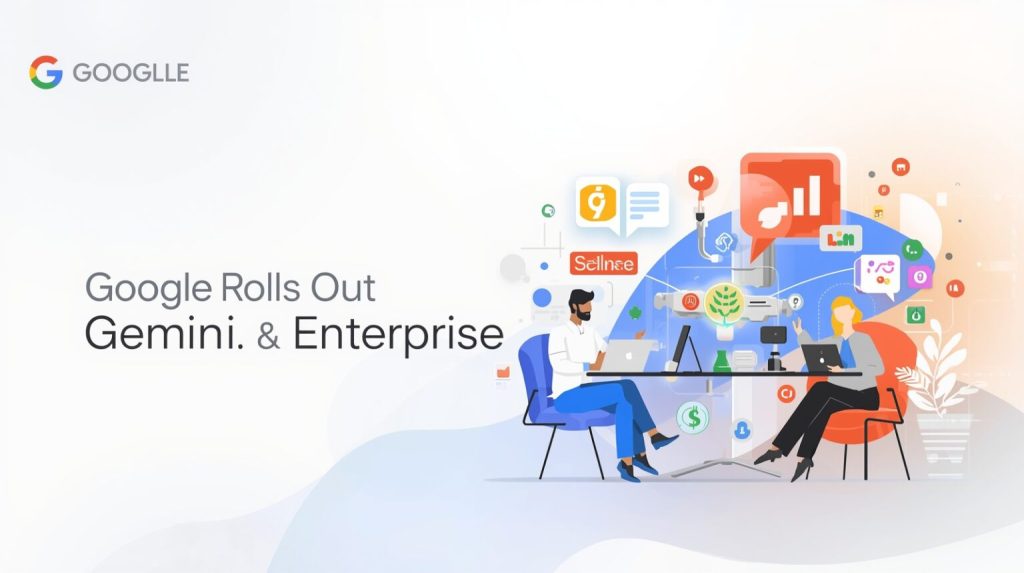
Google launched Gemini Enterprise this week, and they’re not messing around. This conversational platform lets businesses build and deploy AI agents across their company data and apps. They already have Gap, Figma, and Klarna using it in production.
What this means for you: If your team spends hours digging through documents or answering the same internal questions repeatedly, this could be good news for you. The integration with Google Workspace makes the adoption path more straightforward.
My take: The enterprise agent battle is heating up. Before you commit to any platform, map out your specific use cases and run a proper comparison. What works for Gap might not work for your team. If you are on Google workspace, this will likely be your best option.
Amazon enters the fray with Quick Suite
Not to be outdone, Amazon unveiled Quick Suite their answer to the enterprise productivity challenge. This platform targets document management, communication workflows, and knowledge sharing across organizations.
Why it matters: More competition usually means better pricing and faster innovation. If you’re already deep in the AWS ecosystem, this could offer smoother data handling and security alignment.
My take: Don’t get caught up in vendor hype. Focus on which platform reduces the most friction for your daily workflows and aligns with your existing data governance. If you are on Microsoft, CoPilot will likely be your best solution and if you are on Google, Gemini will likely be your best solution. Leverage what you already have, no need to complicate things more than necessary.

MIT’s breakthrough in robot training
MIT CSAIL and Toyota Research Institute released something pretty clever a method for generating realistic 3D training environments for robots using AI. Instead of collecting expensive real-world data, they can now create physics-accurate simulations of kitchens, warehouses, you name it. Waymo has been doing this for years, btw.
Why this is interesting: If you’re working with robotics, automation, or even digital twins, synthetic data generation could dramatically cut your development costs and speed up testing cycles.
The bigger picture: We’re seeing synthetic data become a force multiplier across industries. We’re using it with smaller clients now, as prices have come down and outputs become even better.

HeyGen supercharges its creative toolkit
Here’s where things get interesting for content creators. HeyGen just rolled out some major updates to their AI Studio:
- Sora2 integration with three entry points for video generation
- 14 new caption styles with full font and color customization (we’ve been waiting for this!)
- AI Tab for instant B-roll using multiple video models (Opus had it first and we are glad it’s in HeyGen now!)
- UGC ad creation that turns product images into complete ad variations
Why this matters: Marketing teams can now generate B-roll, scenes, and conceptual visuals without app switching. The UGC ads feature is particularly smart it addresses the constant need for ad variations while maintaining brand consistency.
How to use it: Treat this like having an in-house creative studio. Set up your brand guidelines first, build a template library, then run weekly creative sprints to test different messaging approaches. Mulit-varient testing has never been easier!
Policy and legal updates to track
Two things worth noting: The White House is asking for public input on AI regulations that might be slowing innovation (comments due October 27), and a federal judge let music publishers continue their lawsuit against Anthropic over alleged lyric copying.
Why it matters: We’re seeing policy try to reduce friction for lower-risk AI applications while courts shape the boundaries around training data and content generation. Your compliance strategy needs to account for both movement and uncertainty.
Action item: If regulations are constraining your operations, now’s the time to file comments. Also, tighten up your content provenance and opt-out controls before year-end.
Tools worth trying
- HeyGen – Create professional videos with AI avatars and voices, now with Sora2 for B-roll generation
- Talkadot – use to capture real-time feedback, collect testimonials, and turn engaged audience members into future clients.
- Jasper – Collaborative content creation with brand voice controls and workflow automation
Experiment Report: Connecting a Website Chatbot to a Google Drive RAG (Gemini + AI Studio)
Goal: Let our website chatbot answer questions from a live Google Drive folder (transcripts/docs) without manual uploads.
What happened
- We tried Gemini (gems) and Google AI Studio to read a Drive folder.
- The AI Studio app worked inconsistently (errors, not always using the folder).
- Our OS (GoHighLevel) bot uses its own knowledge area—no simple “link a Drive folder.”
- Third-party vendor (“Synergize”) likely needs to host the RAG or support Drive indexing.
What we’re doing now
- Create and use an FAQ pack so the bot can work immediately.
- Keeping all transcripts in one shared Drive folder for future indexing.
What to ask your chatbot vendor
- Can your bot index a Google Drive folder directly?
- If yes: what permissions, file types, and limits?
- If no: can your bot call our RAG API instead?
Bottom line:
This is possible, but not plug-and-play. Either the vendor supports folder indexing, or we provide a simple API they can call. FAQs go first so we can ship value now.
That’s a wrap for this week. The enterprise tools are getting more capable, creative platforms are becoming more sophisticated, and the regulatory landscape keeps evolving.
What’s your team’s biggest workflow bottleneck right now? Hit reply and let me know I might have some specific suggestions based on what I’m seeing work for other teams.
Take care,
-Nicole A. Donnelly