

How OpenAI, MIT, and Sword Health are Driving Business Innovation with AI
Hey there,
This week, the AI world is buzzing with a few big stories that have some serious implications for how businesses can grow. From a highly publicized new model release to a unique approach to data storage, these developments aren’t just for tech giants—they’re for you, and they’re about giving your business a smarter edge. Let’s dive in!
This Week’s Insights
OpenAI’s GPT-5 is a “PhD-Level Expert” in Your Pocket
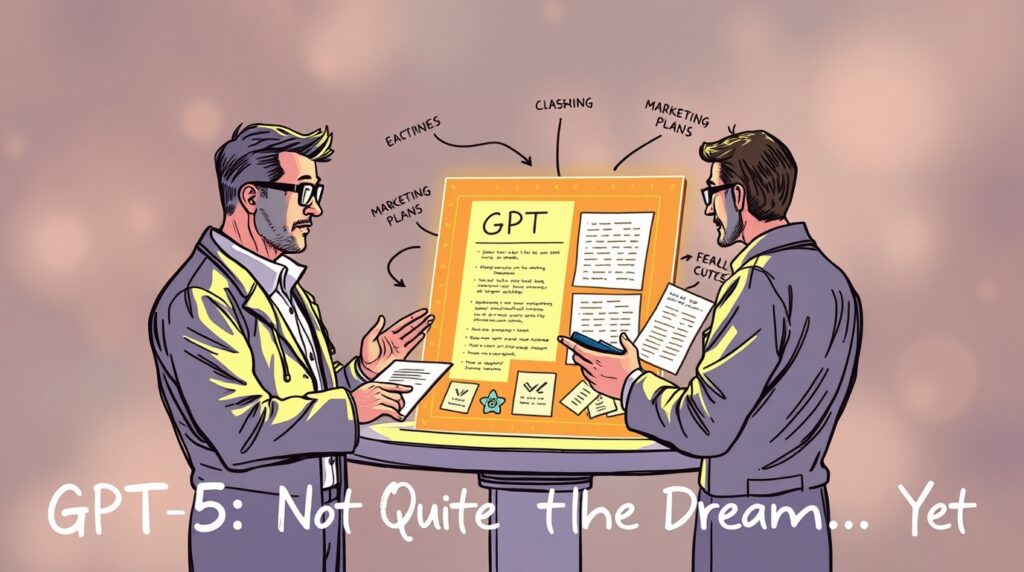
OpenAI has launched its latest model, GPT-5, and it’s claiming that it is a significant leap forward in conversational AI. The company is positioning it as a team of PhD-level experts, suggesting it’s more accurate, less prone to deception, and better at complex tasks like coding. For businesses, the dream ofa new era of enhanced productivity. Imagine a tool that can act as an on-demand consultant for your marketing, legal, or development teams, providing expert-level assistance without the high cost. Well GPT 5 IS NOT that tool. Not yet.
My take: They must have spent a ton of money on PR. For years, we’ve talked about AI as a tool for automation, but GPT-5’s emphasis on expert-level capabilities changes would put it above the rest. It’s not just about doing tasks faster; it’s about doing them with a higher level of quality and insight. This looks to be a wrapper on all of the existing models. The AI groups online are highly disappointed in the initial outcomes of their everyday prompts/tasks. They report lower quality and more hallucination. Will we ever believe the hype again, I sure won’t and even for this release, I didn’t really care. We just got the Agent feature on Chat GPT and it hasn’t been able to do the majority of requests or not do them well.
We’ll get there eventually.
A New AI Lab at MIT is Focused on Transforming Logistics
The Massachusetts Institute of Technology (MIT) has launched a new lab dedicated to integrating AI into the logistics industry. The goal is to develop solutions that optimize supply chains, improve efficiency, and enhance resilience against disruptions. The lab is collaborating with major companies to pilot AI-driven solutions in real-world scenarios, which could lead to significant reductions in delivery times and operational costs.
My take: This is a great example of how academic research is directly impacting the business world. Logistics can be a huge bottleneck for many companies, and the work being done at MIT could lead to new tools and methodologies that make supply chains smarter and more adaptable. If you’re in a business that relies on complex supply chains, this is a signal that the smartest people are working on solving your problems.

AI is Helping Healthcare Providers Streamline Administrative Tasks and Patient Care
AI’s positive impact on healthcare isn’t just about new treatments; it’s also about making the day-to-day operations more efficient. Companies are using AI to streamline administrative tasks, analyze patient data for personalized treatment plans, and even assist in diagnosis. This is saving healthcare professionals time, reducing costs, and ultimately leading to better patient outcomes.

My take: The healthcare industry is notoriously complex and burdened by paperwork. The adoption of AI in this sector is a clear demonstration of how technology can address real-world pain points. By automating mundane tasks, AI allows skilled medical professionals to focus on what they do best: caring for people. This shift has a domino effect, leading to a more efficient and effective healthcare system for everyone.
A New Approach to Data Storage
As AI models get more data-hungry, a new challenge has emerged: storing and feeding them massive amounts of data at scale. Cloudian, a company co-founded by an MIT alumnus, is addressing this by creating storage systems designed specifically for the needs of AI agents and models. Their solutions are helping businesses manage the huge volumes of data required to power modern AI applications, ensuring they can operate efficiently and without bottlenecks.
My take: This story is a reminder that AI is more than just the models we interact with. The infrastructure behind it is just as crucial. For any business looking to build its own AI tools or leverage custom models, having a robust and scalable data storage strategy is non-negotiable. This development from Cloudian shows that the market is adapting to these needs, and businesses have new options to consider as they grow their AI capabilities.
AI Enhances Productivity &Well-being for Employees
Microsoft’s Cloud Blog shares over 1,000 stories of businesses using AI to transform their operations. One key takeaway is how AI is enriching employee experiences by automating repetitive tasks. This allows employees to focus on more complex, creative, and valuable work, which in turn boosts job satisfaction and sparks innovation. For example, some companies are using AI to save thousands of work hours and boost productivity by 25%.

My take: This is an important counter-narrative to the idea that AI is only here to replace jobs. By taking over the tedious work, AI is actually empowering employees and improving their overall work-life balance. It’s a testament to how AI can be a collaborative partner in the workplace, not just a replacement. Businesses that embrace AI in this way are likely to see not only productivity gains but also higher employee morale and retention.
How to Create a Gemini Agent (called a Gem)
1. Prepare Your Instructions
- Include details like:
- Workflow steps
- Data sources
- Content requirements
- Style/voice guidelines
- Special instructions (e.g., always include medical/AI research articles)
2. Create the Gem
- Open Gemini’s Gem Builder
- On the navigation on the left hand side Go to Explore Gems → New Gem.
- Add Instructions
- Paste the AI-generated instructions into the “Instructions” field.
- Configure Knowledge
- Upload examples of desired outputs/documents.
- Add any reference files (e.g., resources page, approved tools list).
- Include your “voice” file or paste the voice description.
- Enable Capabilities
- Turn on web search if you want live article sourcing.
- Add resource links so the Gem can pull from your preferred tools/content.
3. Test the Gem
- Check:
- Article selection accuracy
- Industry/category coverage
- Correctness of links
- Adherence to style/voice
- If something is missing:
- Adjust instructions
- Add more examples or resources
- Refine rules (e.g., “Include at least 1 healthcare and 1 education article”)
4. Refine and Share
- Iterate until the output matches your ideal format.
- Save the final version.
- If your workspace supports it, share the Gem link with team members.
- Keep a copy of the final Gem instructions in a folder for future edits.
5. Best Practices
- Keep your instructions updated at least quarterly.
- Maintain a curated “Resources” page so the Gem has relevant, approved content.
- Test in multiple AI tools (Gemini, ChatGPT, Claude) to compare output quality.
- Train the Gem with historical examples for better consistency.
- Include rules for originality (no repeating content week-to-week).
AI Tools To Simplify Your Life
- Gamma – Create presentations, documents, and websites quickly with this AI tool.
- Talkadot – Use this tool to capture real-time feedback, collect testimonials, and turn engaged audience members into future clients.
- Opus Clip – Chop up long-form videos into short-form content for social media.
Let’s Keep the Conversation Going
I love seeing these positive stories about AI because they show us that this technology is a powerful tool for growth and efficiency, not something to be feared. The key is to be proactive and curious about how you can integrate these new capabilities into your own business.
So, how are you thinking about using AI in your business this week? Let’s keep exploring these opportunities together.
Can’t wait to hear from you!
Cheers,
-Nicole Donnelly
Founder, AI Smart Ventures